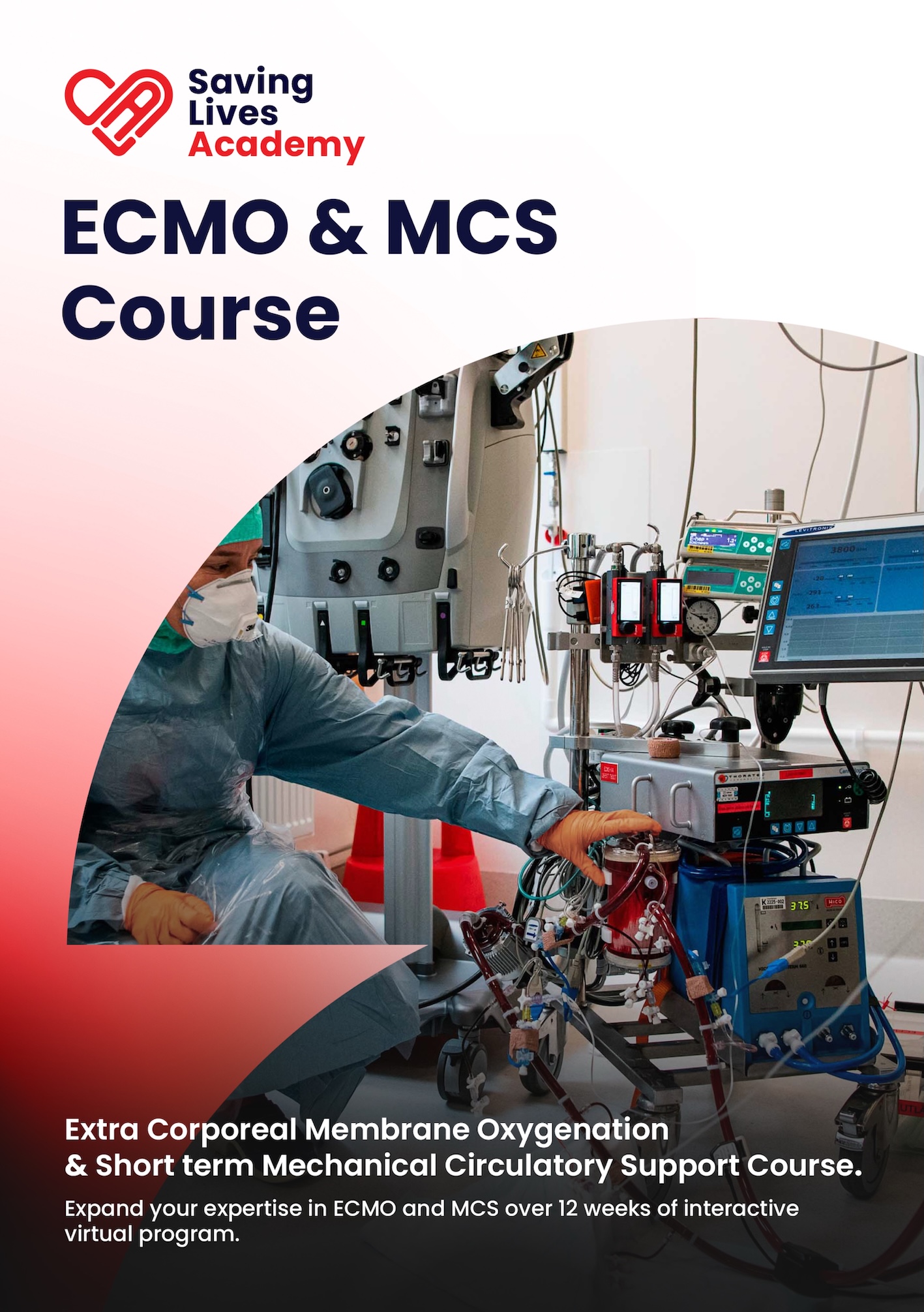
Extra Corporeal Membrane Oxygenation (ECMO) and Mechanical Circulatory Support (MCS) RECORDED course
Wishlist Share
Share Course
Page Link
Share On Social Media

About Course

What Will You Learn?

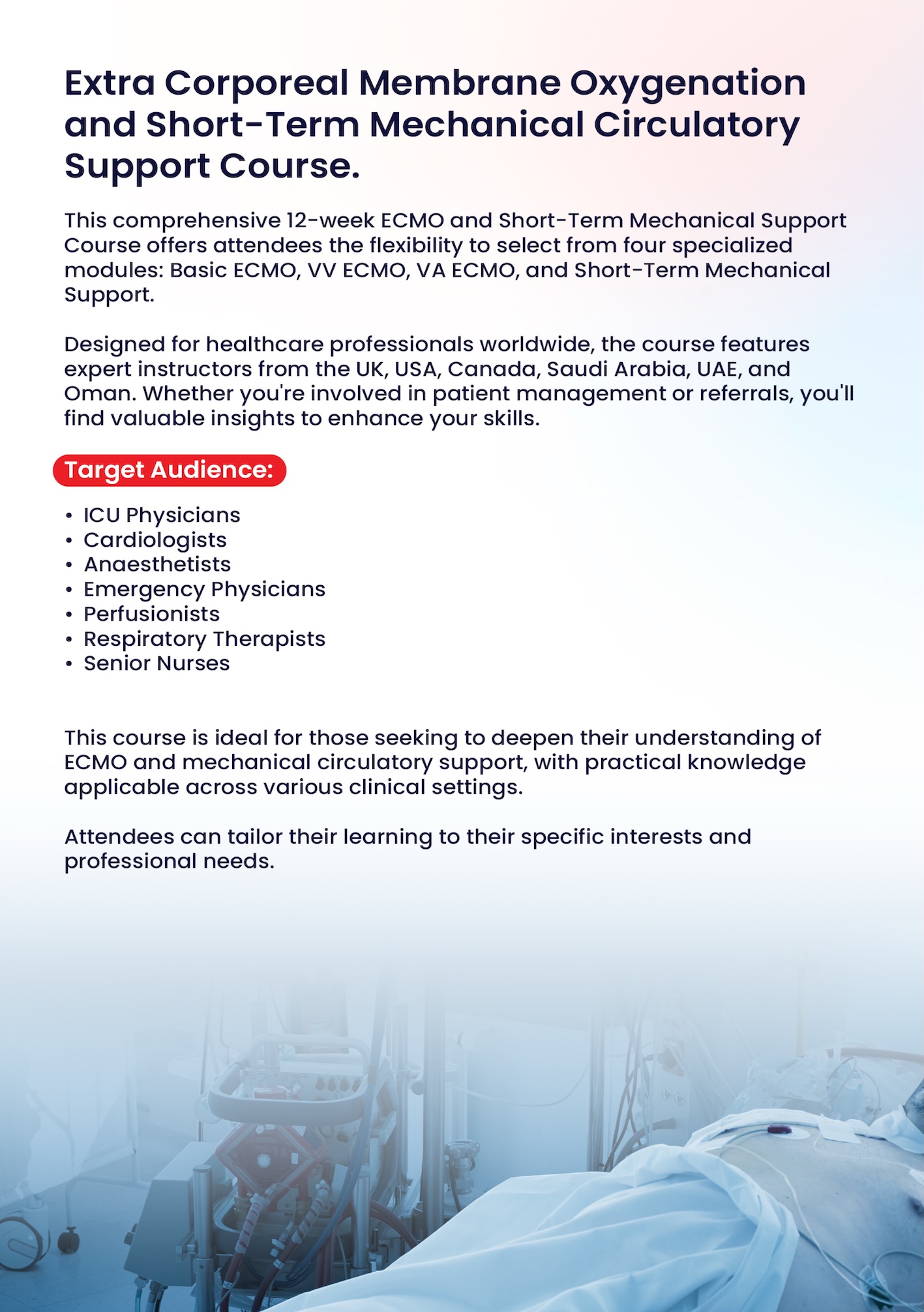
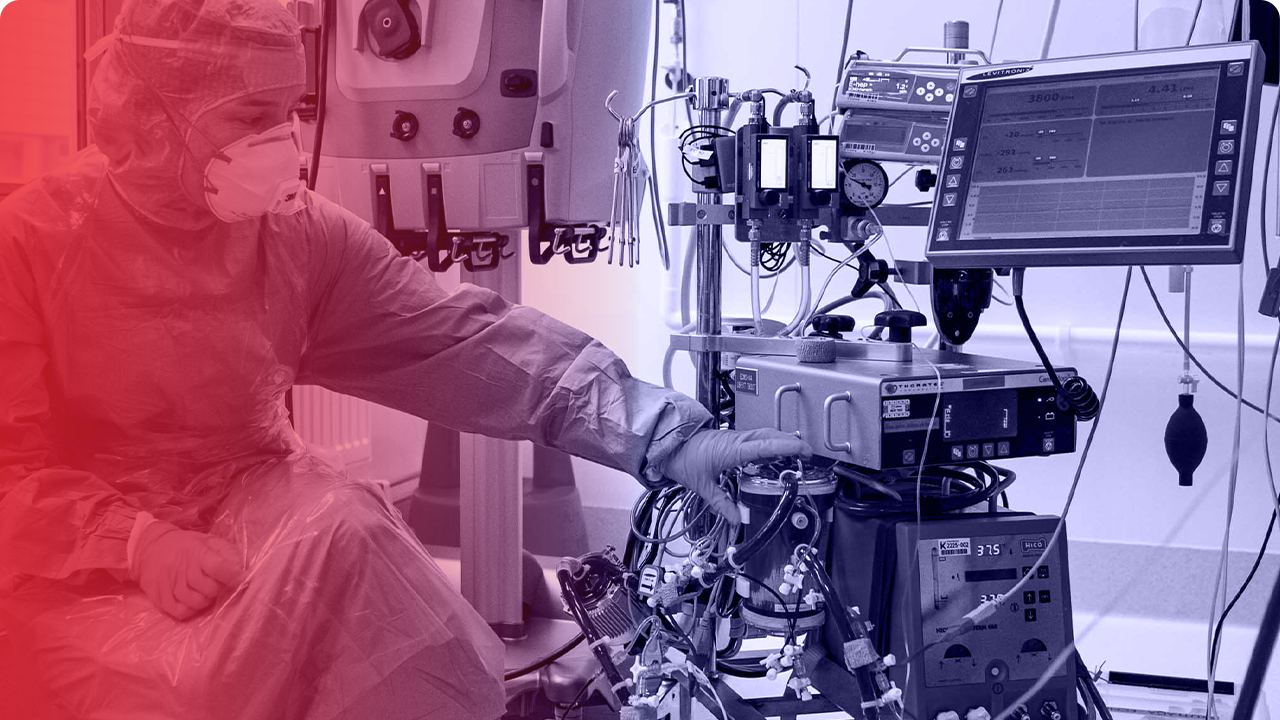
  • This on-line educational program focuses on Extracorporeal Membrane Oxygenation (ECMO) & Mechanical Circulatory Support (MCS).
  • It is designed for providers caring for patients on ECMO or requiring MCS in critical care areas.
  • Duration: 12 weeks
  • Format: Blended learning with pre-recorded lectures by leading experts, live discussions and multiple-choice questions to test knowledge acquisition

Course Content

Module 1: Basic ECMO
Module I: Extracorporeal Membrane Oxygenation Basics (ECMO Basics) This module covers the foundational knowledge of ECMO, including circuit physiology, components, and basic ECMO management. Duration: 3 Weeks (Course weeks 1 to 3) Week 1: Introduction to ECMO Week 2: ECMO Physiology & Circuit Management Week 3: ECMO Complications and Troubleshooting Module I Pretest: 30 MCQs

  • Handbook Module 1
  • Module 1 Pre test
  • Week 1 – Lecture A – Overview of ECMO Therapy, History of ECMO, and The Evidence behind ECMO (Dr. Giles Peek)
    35:21
  • Week 1- Lecture B – Indications, and Basic Configurations of ECMO (Dr. Ahmed Hegazy)
    39:31
  • Week 1 – Lecture C – ECMO Circuit Components: cannulas, tubing, pump, membrane oxygenator, pressure/flow monitors, and other additional components (Ahmed Hegazy)
    26:29
  • Week 1 – Lecture D – Physiotherapy and Ambulation on ECMO Mr. Aaron Trush
    36:31
  • Webinar 1 Records
    02:15:27
  • Week 2 – Lecture A – ECMO physiology including oxygenation and CO2 removal – Dr Ahmed El Masry
    48:26
  • Week 2 – B. Anticoagulation Management in ECMO Patients (Ryan Rivosecchi)
    43:48
  • Week 2 – Lecture C – Pharmacodynamics and pharmacokinetics of sedatives and antimicrobials on ECMO ( Safa Al Marzooq)
    31:47
  • Week 2 – Lecture D – Outcomes of VA & VV ECMO (Dr Amr Hashim)
    26:51
  • Webinar 2 Records
    57:00
  • Week 3 – Lecture A – ECMO Complications- Bleeding, thrombosis, hemolysis, and neurologic complications (Akram Zaaqoq) Mod
    40:11
  • Week 3 – Lecture B – Troubleshooting ECMO Part I_ Drainage insufficiency, pump failure, and oxygenator failure (Ahmed Hegazy) Mod
    36:59
  • Week 3 – Lecture C – Troubleshooting ECMO Part II/ Circuit disruption, air embolism and accidental decannulation (Ahmed El Masry)
    28:34
  • Week 3 – Leture D – Management of cardiac arrest on VV ECMO (Ahmed Magdy)
    26:36
  • Webinar 3A Records- Dr Maria De Piero
    41:39
  • Webinar 3B Records- Dr Amr Hashem
    32:48
  • Module 1 Post test
  • MODULE 1 Post Test Answer Key

Module II: Veno-venous Extracorporeal Membrane Oxygenation (VV ECMO)
This module focuses on the use of VV ECMO in patients with respiratory failure. Topics include ARDS management, VV ECMO cannulation strategies, and VV ECMO troubleshooting. Duration: 3 Weeks (Course weeks 4 to 6) Module II Pretest: 30 MCQs Week 4: VV ECMO Fundamentals Start Date: July 20, 2025 a. Respiratory failure and ARDS management (Ahmed Magdey) b. Evidence for VV ECMO use and landmark trials (Hesham Faisal) c. VV ECMO cannulation techniques and pros and cons of different VV ECMO configuration choices (Moustafa Esam) d. ECMO Retrieval and Patient Transport on ECMO (Ahmed Labib)

Module III: Veno-arterial Extracorporeal Membrane Oxygenation (VA ECMO)
This module focuses on VA ECMO for cardiogenic shock, including cannulation strategies, LV unloading, and advanced applications. Duration: 3 Weeks (Course weeks 7 to 9) Module II Pretest: 30 MCQs

Module IV: Mechanical Circulatory Support (MCS)
This module focuses on short-term MCS devices, including IABP, Impella, and RVADs, and their role in cardiogenic shock. In addition, acute post-implant care of the durable LVAD patient is discussed. Duration: 3 Weeks (Course weeks 10 to 12)

Student Ratings & Reviews

No Review Yet

No Review Yet

Want to receive push notifications for all major on-site activities?

Saving Lives Academy
Privacy Overview

This website uses cookies so that we can provide you with the best user experience possible. Cookie information is stored in your browser and performs functions such as recognising you when you return to our website and helping our team to understand which sections of the website you find most interesting and useful.